
Company History
About Crowley
Crowley Company History
A Message from Tom Crowley, Chairman and CEO
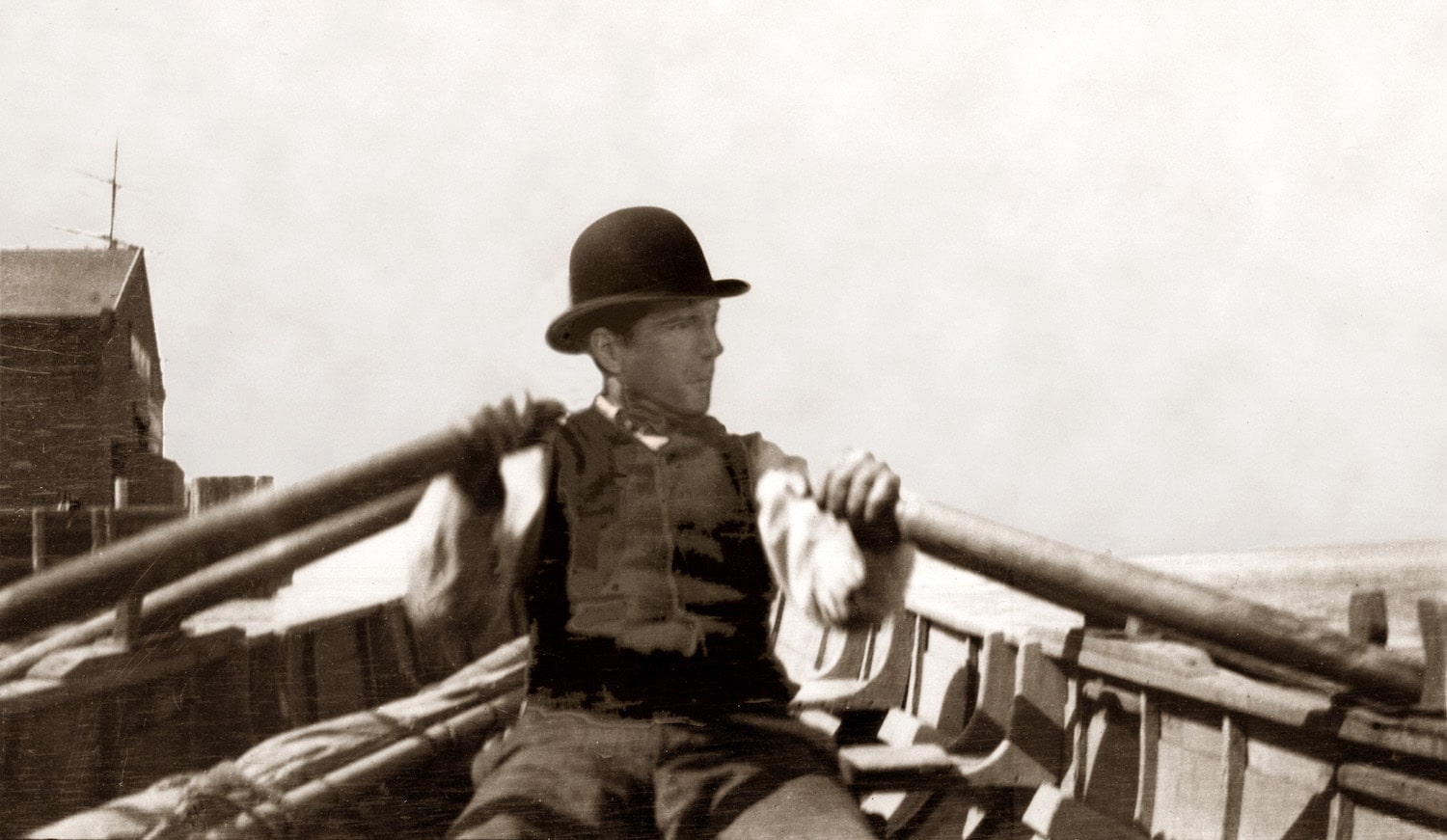
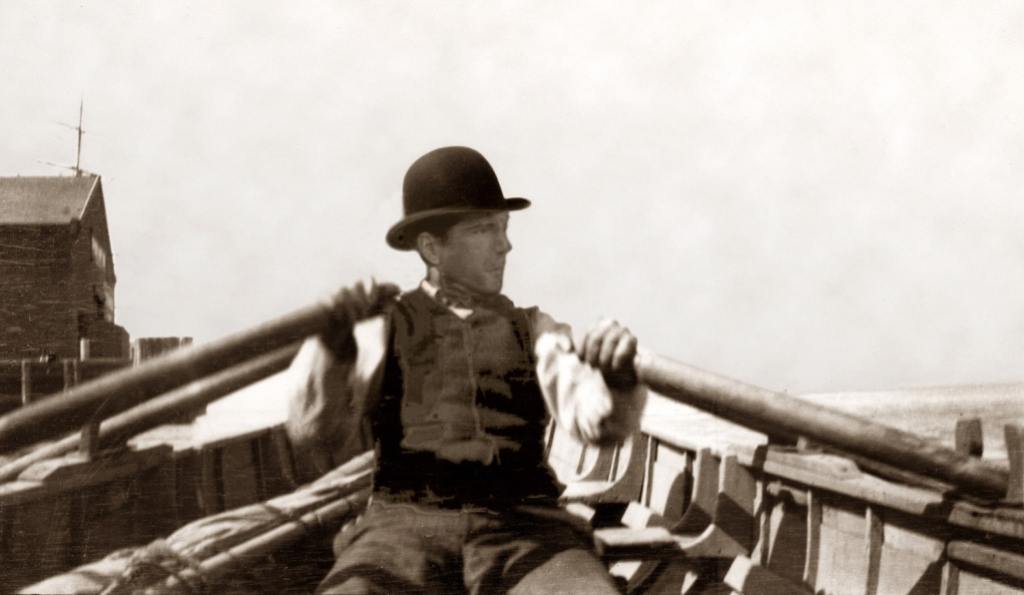
In 1892, my grandfather, Thomas Crowley, bought a Whitehall rowboat and went into business for himself shuttling personnel and supplies between the San Francisco waterfront and the tall sailing ships that would anchor in San Francisco Bay. From these humble beginnings grew the company we know today as Crowley Maritime Corporation. By taking a look back over these many years, we can better appreciate the work, sacrifice, and entrepreneurial spirit of those who came before us.
1892 – 1902
- Founder Thomas Crowley purchased an 18-foot Whitehall boat to transport personnel and supplies to ships in San Francisco Bay.
- Purchased additional motor and gasoline launches and small barges.
- Expanded services to include bay towing and ship assist, in addition to supply transport.
1903 – 1913
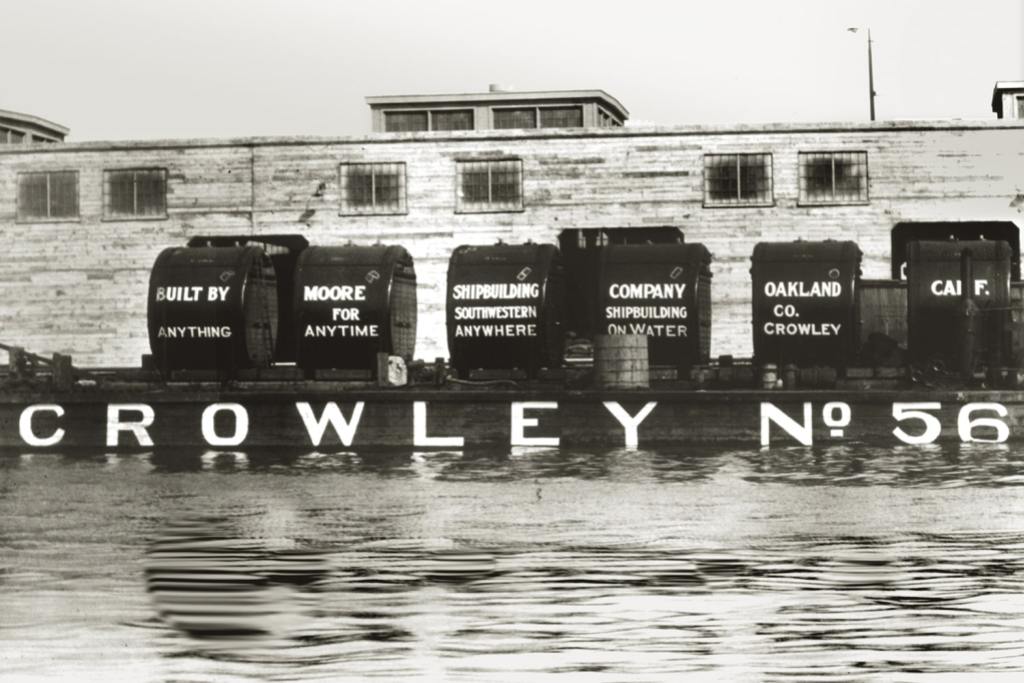
- Helped ferry passengers and belongings out of San Francisco after the 1906 earthquake.
- Transported nitrate from South America and coal for government operations.
- Added tugboats to the fleet.
- Built a marine railway, dock, and woodworking mill (Crowley Shipyard).
1914 – 1924
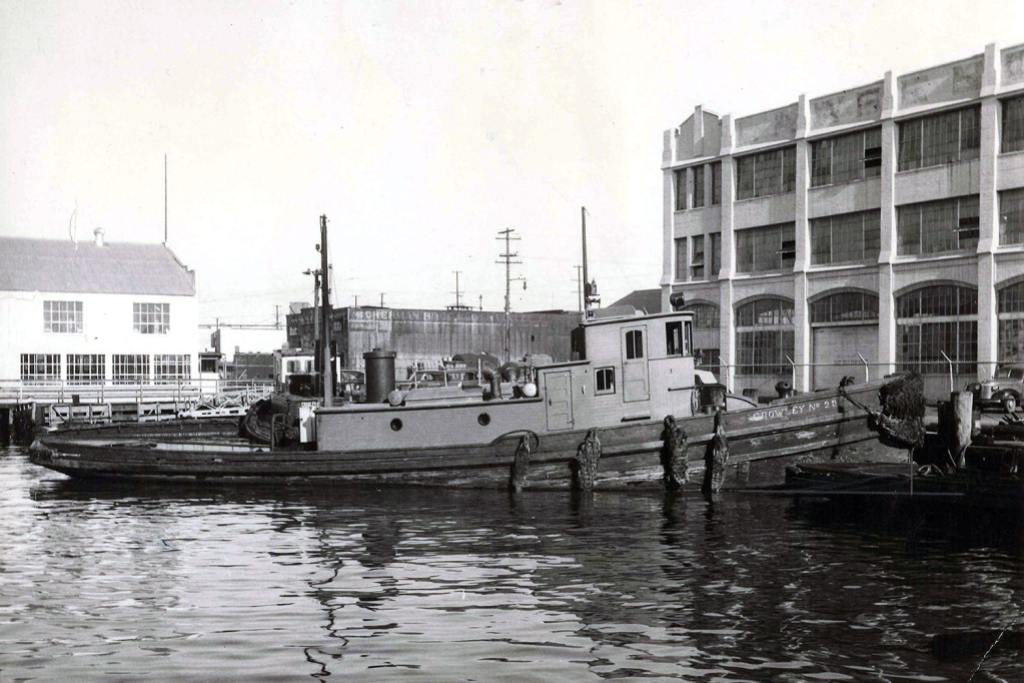
- Added derrick barges and four wooden, steam-powered tugs.
- Expanded coal and commodity transport to Australia and South America.
- Expanded to Puget Sound and established tug service in San Pedro; provided tug, launch, and barge services in San Francisco Bay.
1925 – 1935
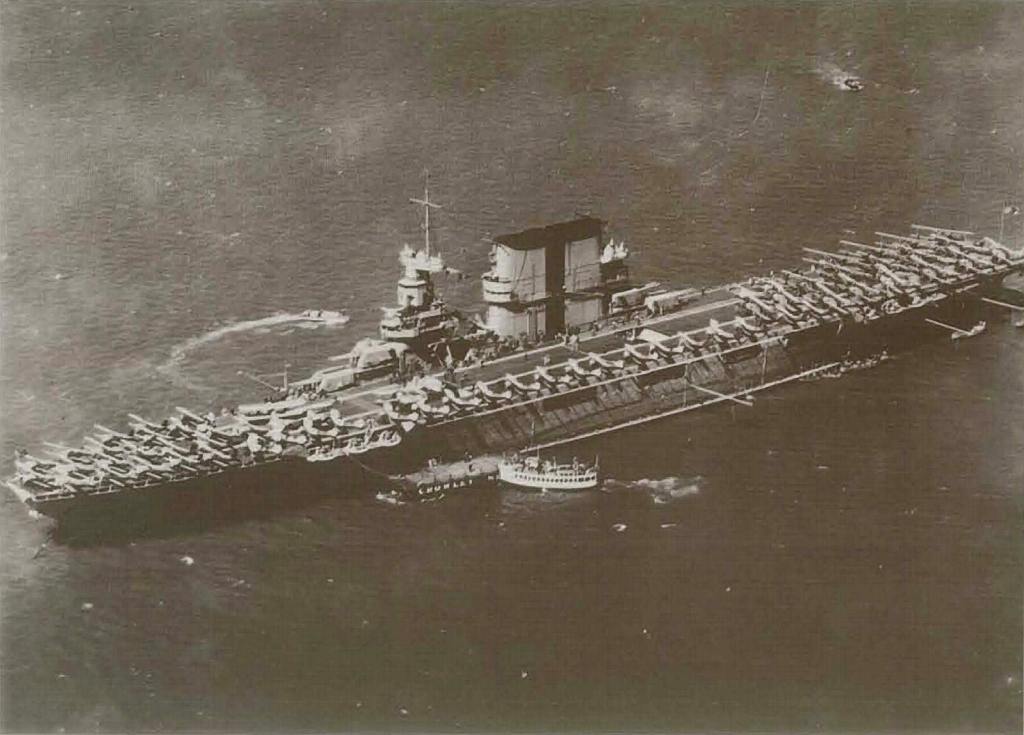
- Constructed three water taxis.
- Converted the vessel fleet from steam to diesel.
- Spun off the shipyard operation as a separate company.
1936 – 1946
- Expanded into dredging, marine construction, and heavy-lift derrick barge services in Southern California harbors.
- Designed 7,000-, 9,000-, and 11,000-bbl barges for petroleum transport.
- Launched passenger service between Treasure Island and the Golden Gate Bridge.
- Purchased oil-barging equipment from Shell Oil to expand petroleum transport.
- Built ships in-house for the U.S. government in support of World War II.
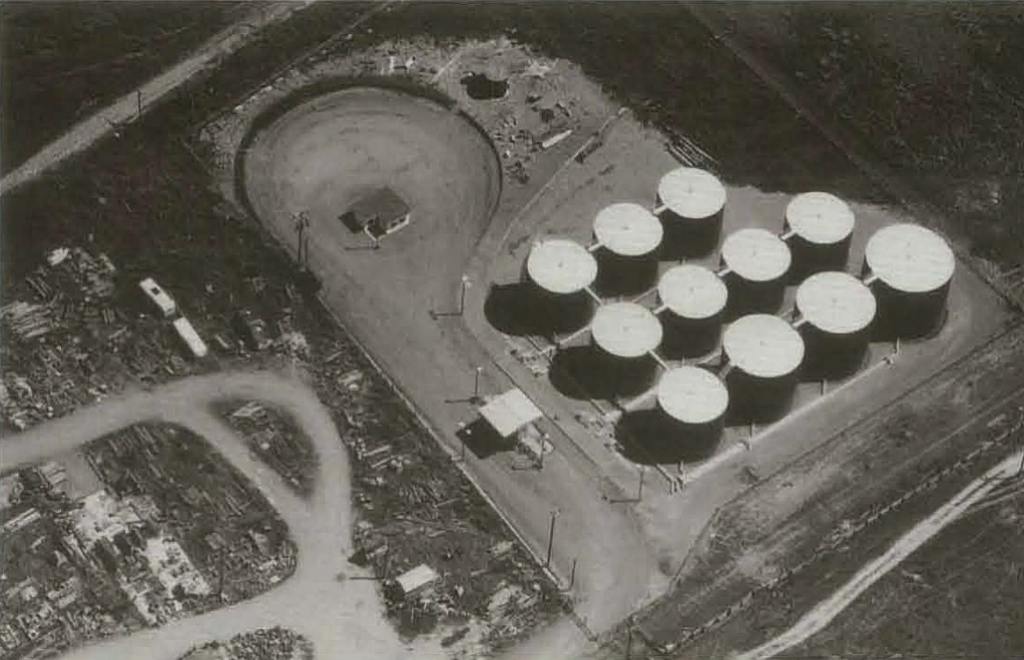
- Developed petroleum terminals to improve distribution efficiency.
1947 – 1957
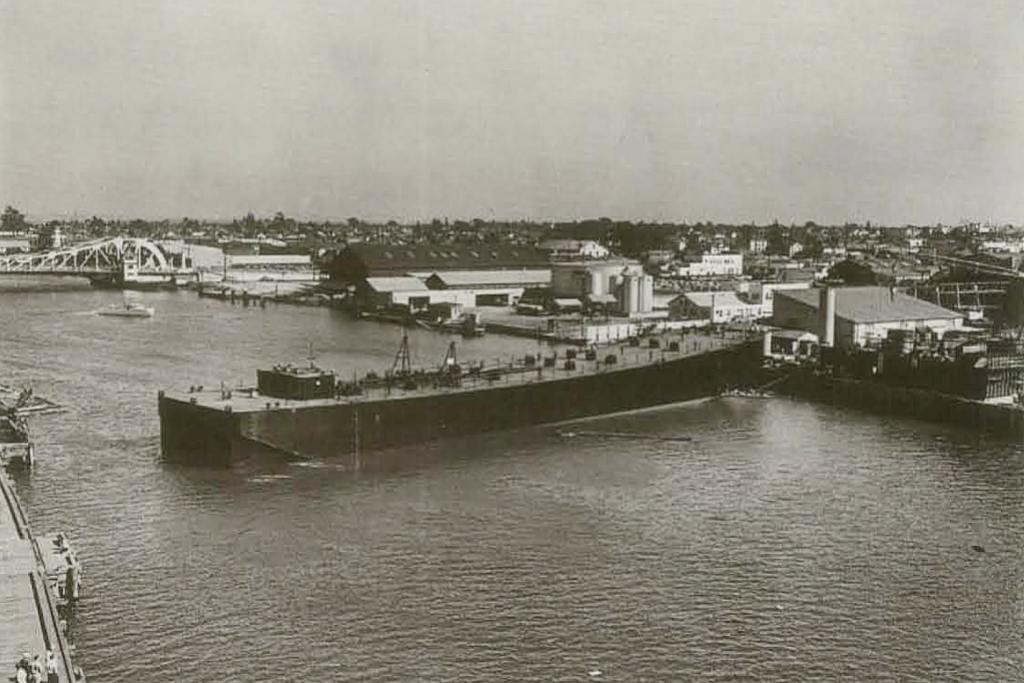
- Built its first seagoing oil barge and moved bulk petroleum from San Francisco to Coos Bay.
- Towed the Oklahoma from Hawaii to Oakland after the Pearl Harbor attack.
- Pioneered railcar transport of dissolving pulp between Ketchikan, Alaska, and Prince Rupert, British Columbia.
- Supported U.S. Government Arctic logistics by resupplying the DEW Line along Alaska’s coastline.
1958 – 1968
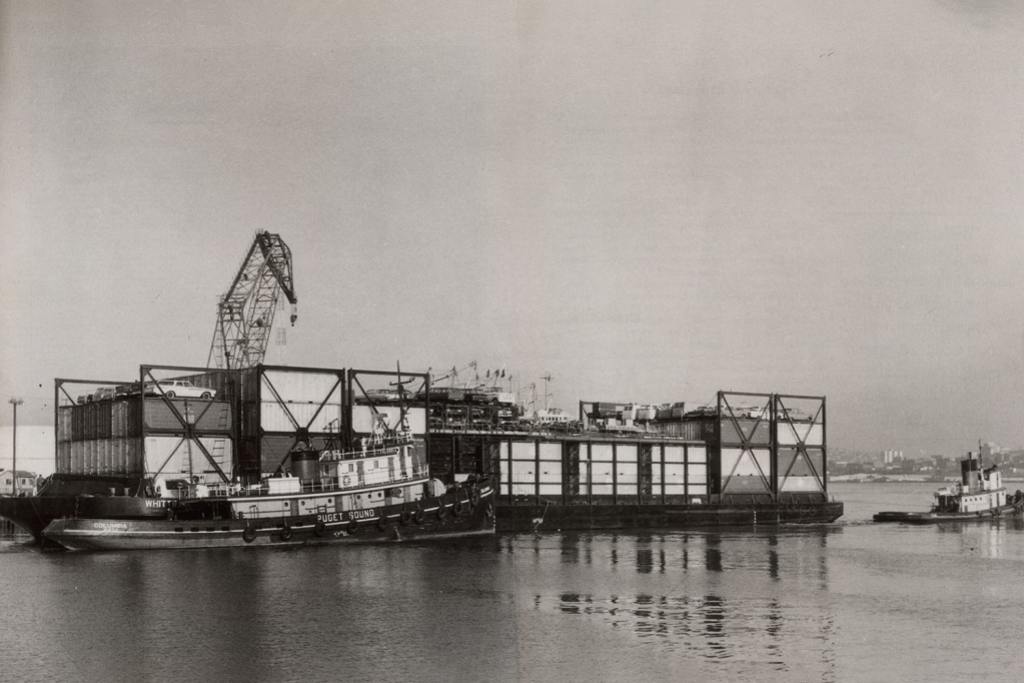
- Launched regular container service between Alaska and the Lower 48.
- Added four steel barges (300-container capacity), five new tugs, additional containers, and terminal cranes.
- Completed the first Arctic sealift of oil industry cargo around Alaska to Prudhoe Bay.
1969 – 1979
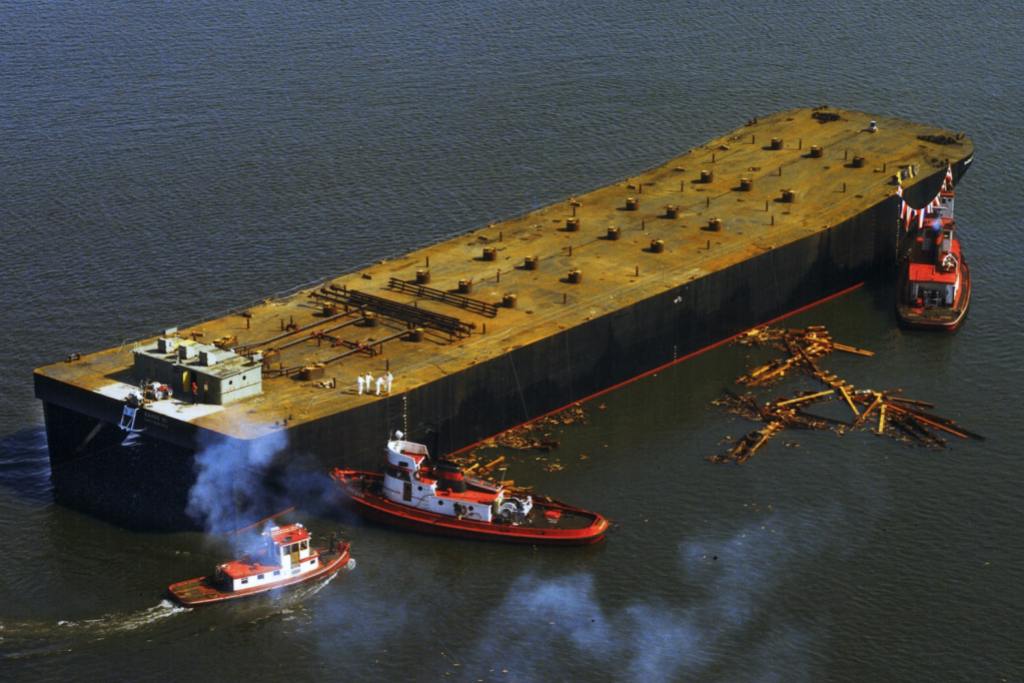
- Completed a 187,000-ton cargo sealift to Prudhoe Bay, the largest commercial sealift in maritime history.
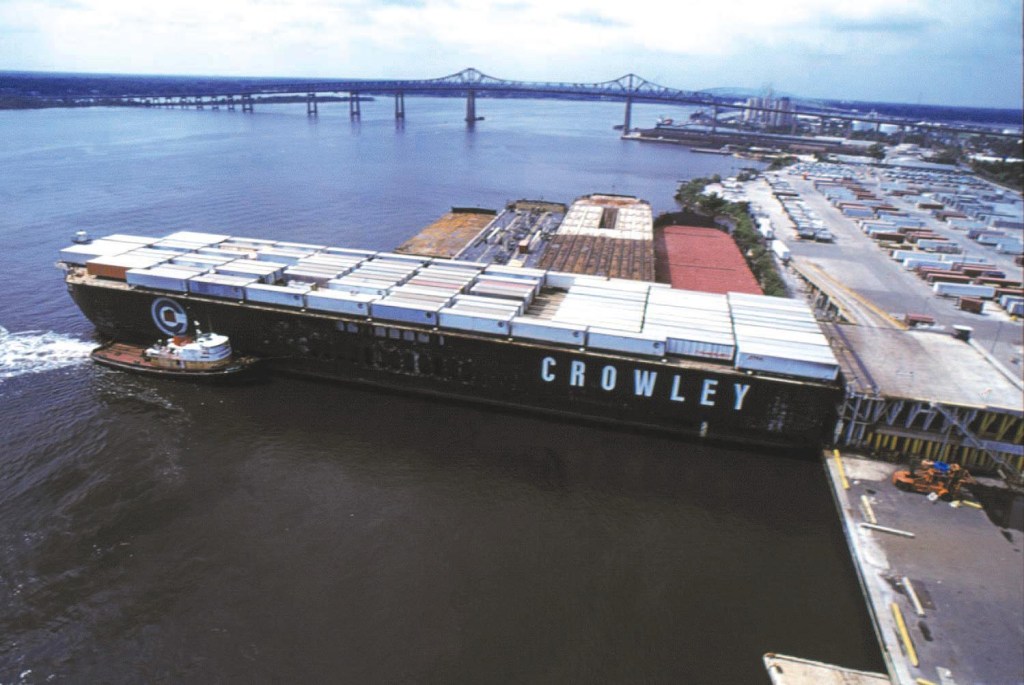
- Launched weekly roll-on/roll-off (RO/RO) barge service to Puerto Rico from Florida and the U.S. Gulf.
- Was selected by Alyeska to provide vessel assist and tanker escort services in Valdez.
- Added 25 Invader-class tugs and nine 450-series petroleum barges.
1980 – 1990
- Built new terminals in Lake Charles, Louisiana, and Petty’s Island near Philadelphia.
- Built three container ships to serve Latin America.
- Stretched five triple-deck barges from 400 feet to 730 feet, increasing capacity by 78%.
- Expanded petroleum storage, tank farms in Nome, Kotzebue, and Captain’s Bay.
- Supported response to the Exxon Valdez grounding as a primary contractor for spill cleanup marine services.
1991 – 2001
- Led the cleanup of the barge Morris J. Berman oil spill off San Juan, Puerto Rico.
- Appointed Thomas B. Crowley Jr. as Chairman, President, and CEO.
- Sold the South America liner business and the Crowley American Transport name.
- Added two Prince William Sound-class tugs and three 140-foot Prevention and Response Tugs (PRTs).
- Completed the first licensed commercial cargo delivery from the U.S. to Havana, Cuba in nearly 40 years.
2002 – 2012
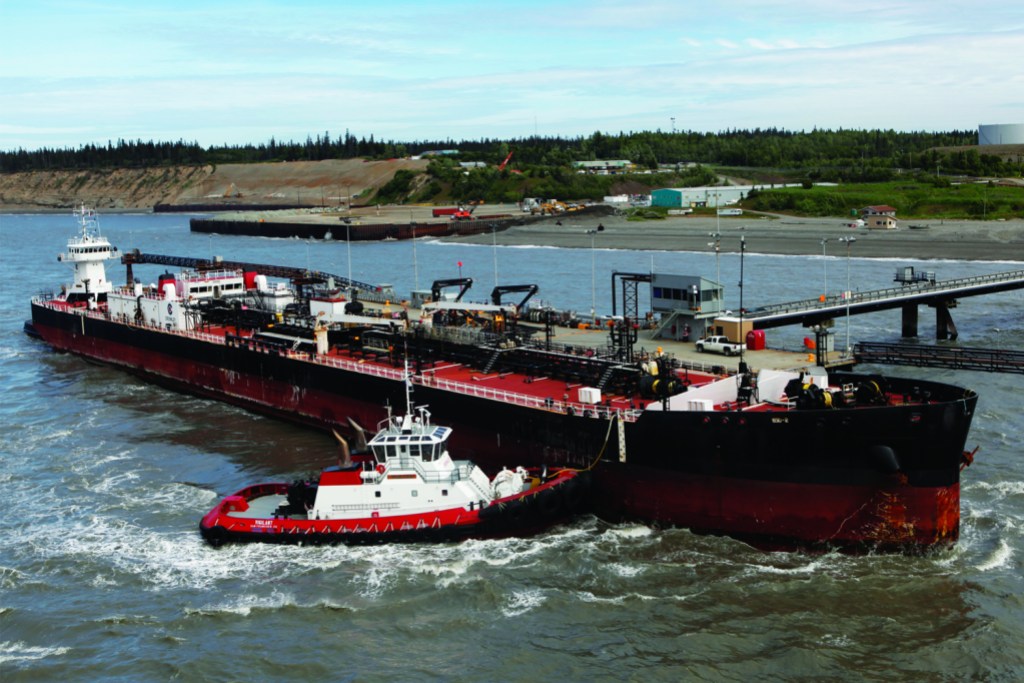
- Added newly built articulated tug-barges (ATBs) and continued the buildout of 17 vessels across the 550, 650, and 750 classes.
- Resumed ship assist and tanker escort services in the San Francisco Bay Area.
- Introduced the Marty J (first of nine 455-series heavy-deck barges) and the first two Ocean Class tugboats.
- Partnered with TITAN Salvage to restore cargo delivery after the Haiti earthquake and reopen the port.
2013 – 2023
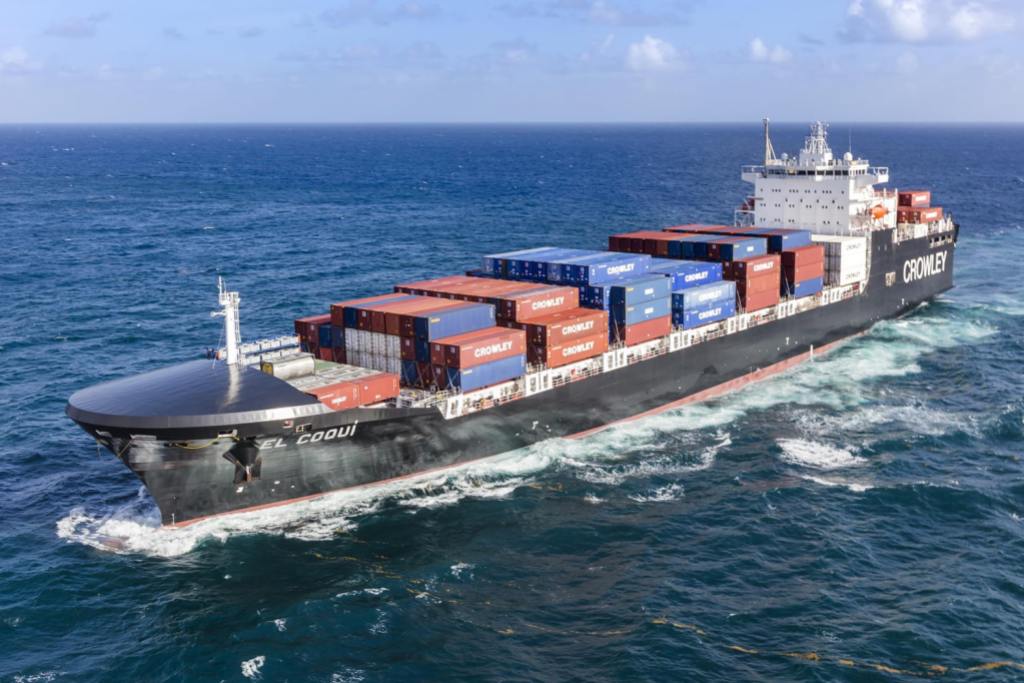
- Added two Ocean Class tugs, four LNG-ready product tankers, two 330,000-barrel tankers, one 100,000-barrel ATB, and two LNG-fueled ConRos.
- Removed the wrecked Costa Concordia, completing the largest maritime wreck removal project to date.
- Secured a 20-year U.S. DOE export license for small-scale LNG supply.
- Provided logistics support for Operation United Assistance in West Africa.
- Won a $2.3B multi-year USTRANSCOM award to support U.S. and Canada transportation and logistics for DoD activities.
- Opened an LNG truck loading terminal in Peñuelas, Puerto Rico.
- Had three Crowley-managed tankers selected for the U.S. MARAD Tanker Security Program.
2024 – Present
- Added eWolf, the first fully electric tugboat in the U.S., to the San Diego fleet.
- Received a 7-year USTRANSCOM extension for Defense Freight Transportation Services (DFTS).
- Added LNG bunker barge Progress, the largest U.S. Jones Act-compliant vessel of its kind, in Savannah, Georgia.
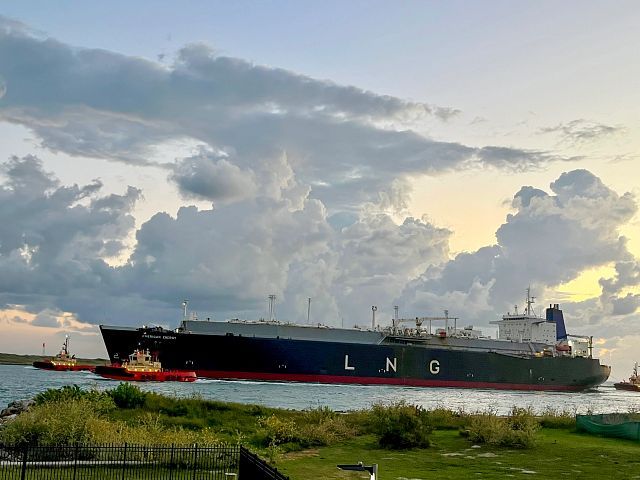
- Deployed the first U.S.-flagged LNG carrier American Energy to serve Puerto Rico.
- Added four LNG-powered Avance-class.
- Coordinated emergency response after the Crowley-managed tanker Stena Immaculate was struck while at anchor.
- The Stena Immaculate became the 43rd vessel in the Gallant Ship Award’s 88-year history to receive the honor for the crew’s safety leadership and actions during a maritime disaster.
Two Men at the Helm
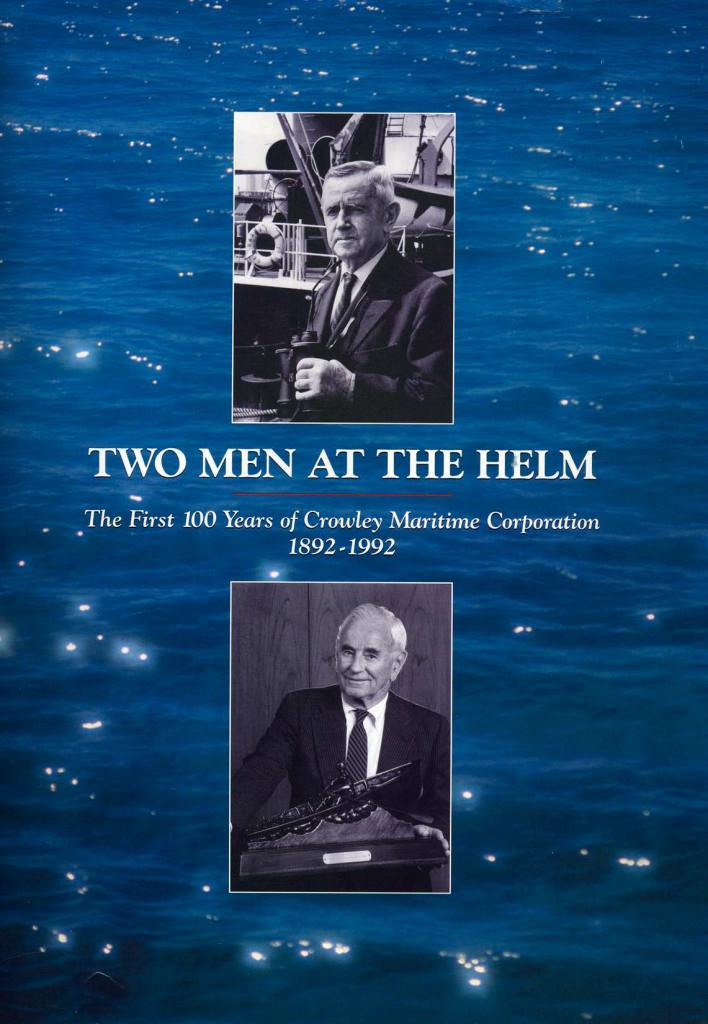
This book chronicles the company’s first 100 years from 1892-1992. It is based on the recollections of Thomas Bannon Crowley Sr., Chairman of the Board and Chief Executive Officer, and other long-time employees of Crowley Maritime Corporation.
All quotations cited in the text are from interviews with, or other recorded statements made by Mr. Crowley in the 1970s, 1980s, and 1990s. This book is free to read or download for offline use. Learn more about the Crowley family business and much more information. Thank you.
Crowley Oral Histories
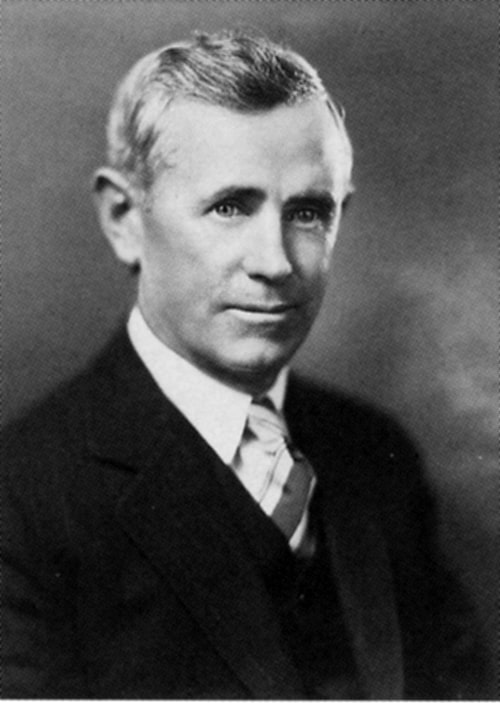
Thomas Crowley: Recollections of the San Francisco Waterfront
Crowley Maritime Corporation’s founder provides an oral history of his memories growing up and building a company on the San Francisco waterfront, in an interview conducted by Karl Kortum, founder of what is now the San Francisco Maritime National Historical Park, and Willa Klug Baum, internationally respected oral historian.
The digital version, housed at the University of California, Berkeley’s Bancroft Library, can be accessed here.
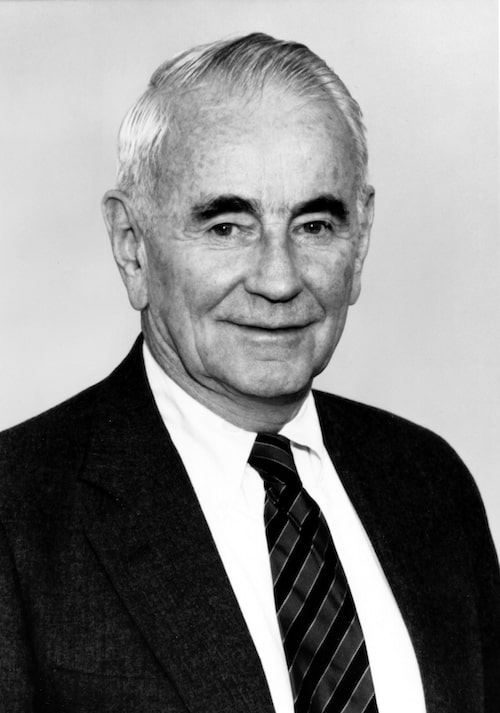
Thomas B. Crowley: San Francisco Bay Tugboats to International Transportation Fleet
A look at the continued growth of Crowley Maritime Corporation from the perspective of Thomas B. Crowley, whose oral account takes off where his father’s left off in Recollections of the San Francisco Waterfront.
The digital version, housed at the University of California, Berkeley’s Bancroft Library, can be accessed here.